
Dental Sealants vs Fluoride in Colgate, WI: Which Helps Prevent Cavities More Effectively?
March 27, 2026 9:00 amYou’re at a routine visit, everything looks good, and the conversation turns to prevention. Maybe sealants are recommended for back teeth, or maybe you’ve just had them placed and fluoride is still suggested afterward. At that point, the question usually comes up: if you’re already using fluoride toothpaste—and even getting fluoride treatments at your visits—why add sealants? Or if sealants are in place, what does fluoride still add?
It can feel a little repetitive at first, like you’re being offered multiple versions of the same thing. In reality, they’re doing different jobs, and understanding that difference makes it easier to see why both are often recommended rather than one replacing the other.
At Lake Five Dentistry in Colgate, WI, we look at how each one protects the tooth in a specific way, based on the areas where teeth are more likely to need extra protection.
Dental Sealants vs Fluoride: How They Work Differently
Dental sealants and fluoride treatments both help reduce the risk of cavities, but they work in very different ways, which is why they’re often used together.
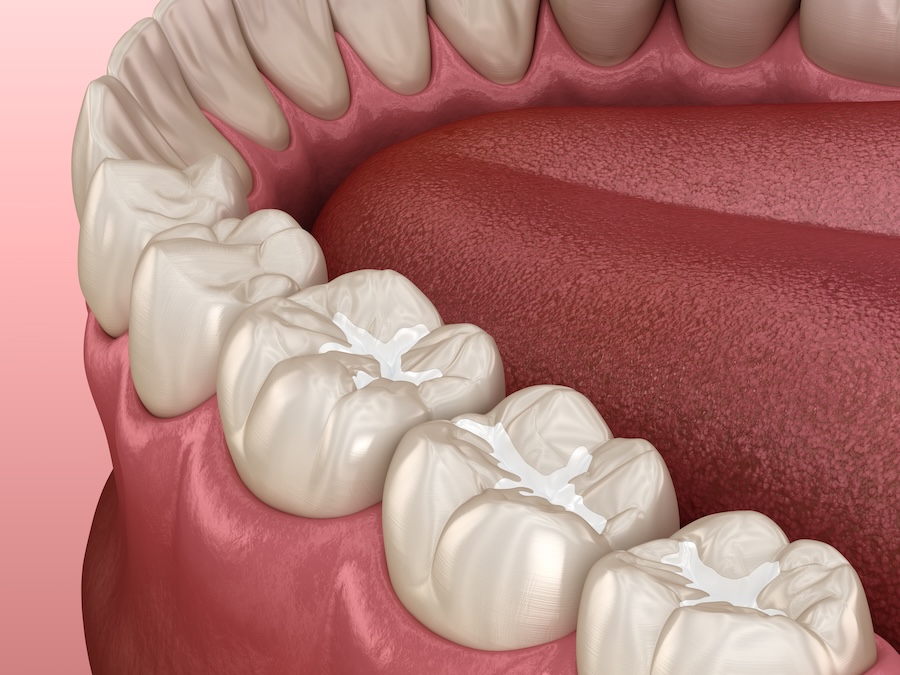
Sealants act as a physical barrier. They’re placed on the chewing surfaces of molars, where small grooves can trap plaque and food. Once those grooves are sealed, they’re smoother and easier to keep clean with regular brushing.
Fluoride works at the enamel level. It strengthens the outer layer of the tooth and supports remineralization, which is the process your teeth use to repair early damage caused by acid exposure.
Because they address different parts of how cavities form, they complement each other rather than overlap.
Where Dental Sealants Make the Biggest Difference
The back teeth—especially molars—have deeper grooves than other teeth. Even with consistent brushing, those areas can be difficult to clean thoroughly, particularly for kids who are still developing their technique.
Sealants are designed specifically for those surfaces. By covering the grooves, they reduce the chance of bacteria settling in places that are harder to reach.
They’re most commonly placed when permanent molars come in, which is why they’re often discussed during children’s preventive visits. Placing them early helps protect those teeth before decay has a chance to start.
Adults can benefit from sealants as well in certain situations, especially if those grooves are deep and the teeth haven’t already been restored.
What Fluoride Adds to the Picture
Fluoride plays a broader role across the entire tooth surface. Instead of focusing on one area, it helps strengthen enamel everywhere it’s applied.
It supports the natural repair process when early signs of decay begin and helps enamel better resist acid exposure. This is particularly important in areas that sealants don’t cover, such as between teeth or along the gumline.
Fluoride is part of daily care through toothpaste, but professional applications during a routine cleaning and exam provide a higher concentration and can offer additional protection when needed.
Why They’re Often Used Together
When you look at how cavities tend to develop, it becomes clearer why both are used.
Molars are more likely to develop decay in their grooves, which is where sealants are most effective. Other areas of the mouth benefit more from enamel strengthening, which is where fluoride plays a role.
Using both allows us to cover those different areas at the same time—one by reducing buildup in hard-to-clean surfaces, the other by strengthening enamel across the rest of the tooth.
How This Applies to Kids
When permanent molars first come in, they’re harder to keep clean simply because of their shape and where they sit in the mouth. Add in the fact that brushing technique is still developing, and those back teeth tend to be where cavities show up first.
Sealants help protect those grooves right away, while fluoride supports the enamel as it continues to strengthen. Used together, they reduce the chances of decay starting in those early years.
This is typically something we review during a comprehensive dental exam, especially as new teeth come in and we’re deciding what protection makes sense at that stage.
What About Adults?
Sealants are used less frequently in adults, but they’re still an option in certain cases. If molars have deeper grooves and haven’t been restored, they may still benefit from that added protection.
Fluoride remains relevant at any age. It continues to support enamel strength and can be especially helpful for patients with sensitivity, dry mouth, or a history of frequent cavities.
How We Decide What Makes Sense
The recommendation comes down to what your teeth actually need and where cavities are most likely to develop.
We look at things like:
- The shape and depth of grooves in the molars
- Whether certain areas are harder to keep clean
- Your cavity history
- Age and stage of dental development
From there, we can decide whether sealants, fluoride, or a combination of both will be most useful—based on where extra protection will make the biggest difference.
Dental Sealants vs. Fluoride in Colgate, WI at Lake Five Dentistry
At Lake Five Dentistry in Colgate, WI, Dr. Kierstin Lorenz focuses on preventive care that’s practical and specific to each patient. Sealants and fluoride are both useful tools—it just depends on where they’ll make the most difference.
If you’re considering sealants for your child or want to better understand your own preventive options, you can call the office or schedule a visit to take a closer look and plan next steps.
Contact UsCategorised in: Dental Sealants, Fluoride Treatments